The Grammar Stage
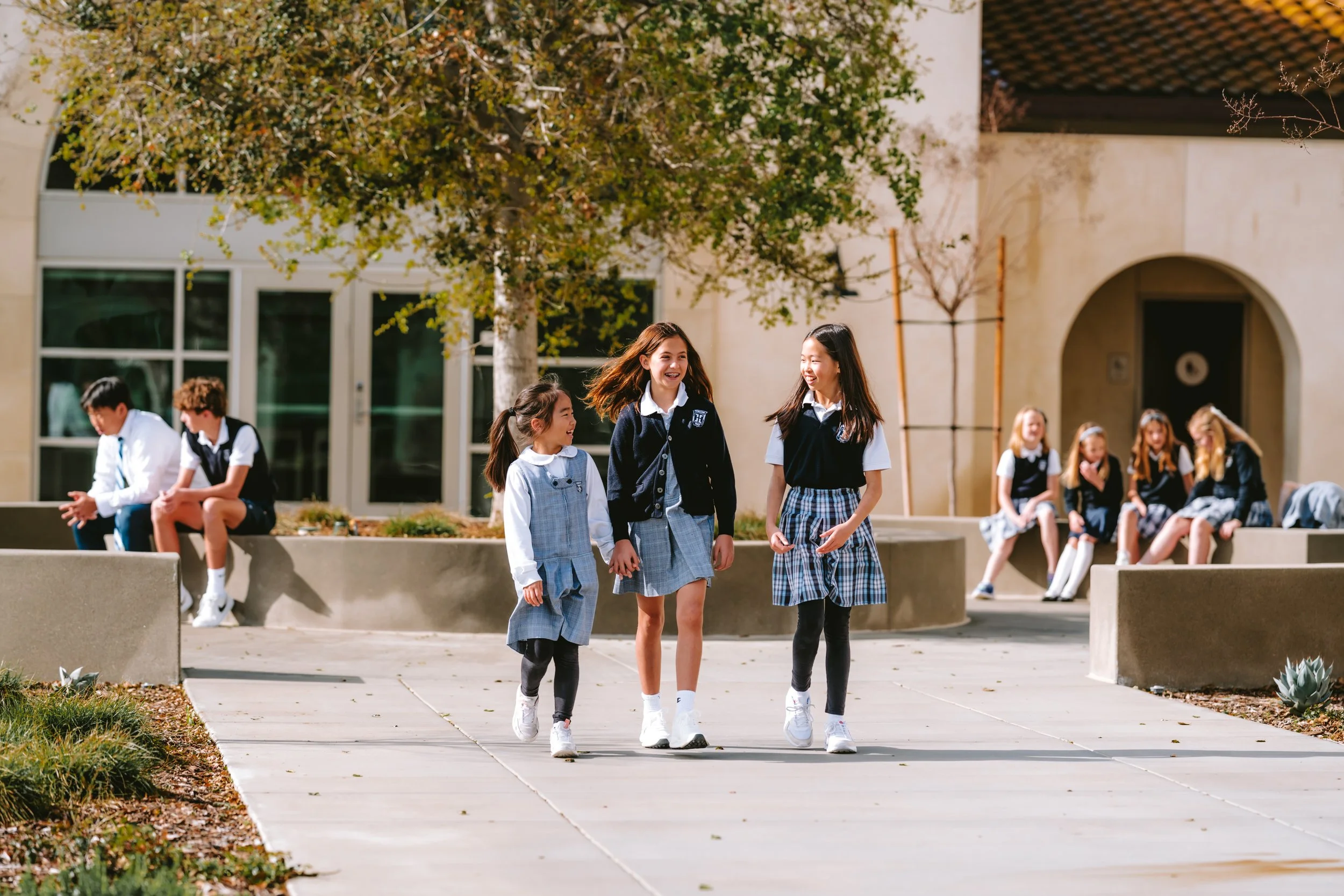
Horizon Prep’s Grammar School provides a classical Christian elementary education for Kindergarten–5th grade students in the San Diego area.
A Joyful Foundation for Lifelong Learning
In classical education, the Grammar stage is the season when children are especially ready to absorb language, facts, stories, songs, patterns, and foundational knowledge. Rather than rushing young students into abstract analysis before they are ready, Horizon Prep gives them a rich storehouse of truth, beauty, vocabulary, Scripture, literature, history, mathematics, science, and language.
Elementary-aged students are naturally eager to learn, memorize, explore, and absorb new information. Horizon Prep teaches in ways that are memorable, engaging, and encouraging — using songs, chants, movement, hands-on activities, reading, writing, projects, Scripture memory, timeline work, and meaningful classroom discussion.
This is a season of laying strong foundations. Students grow in core academic skills, develop confidence as learners, and begin forming habits of attention, curiosity, perseverance, order, and wonder.
At Horizon Prep, students are known personally, challenged appropriately, and encouraged to see all truth as God’s truth.
Key Distinctives
Classical Foundations
The Grammar stage builds the knowledge students will later learn to reason from and communicate with. Students memorize, recite, sing, chant, practice, and repeat important truths until they become part of the student’s intellectual foundation.
Strong Literacy Foundations
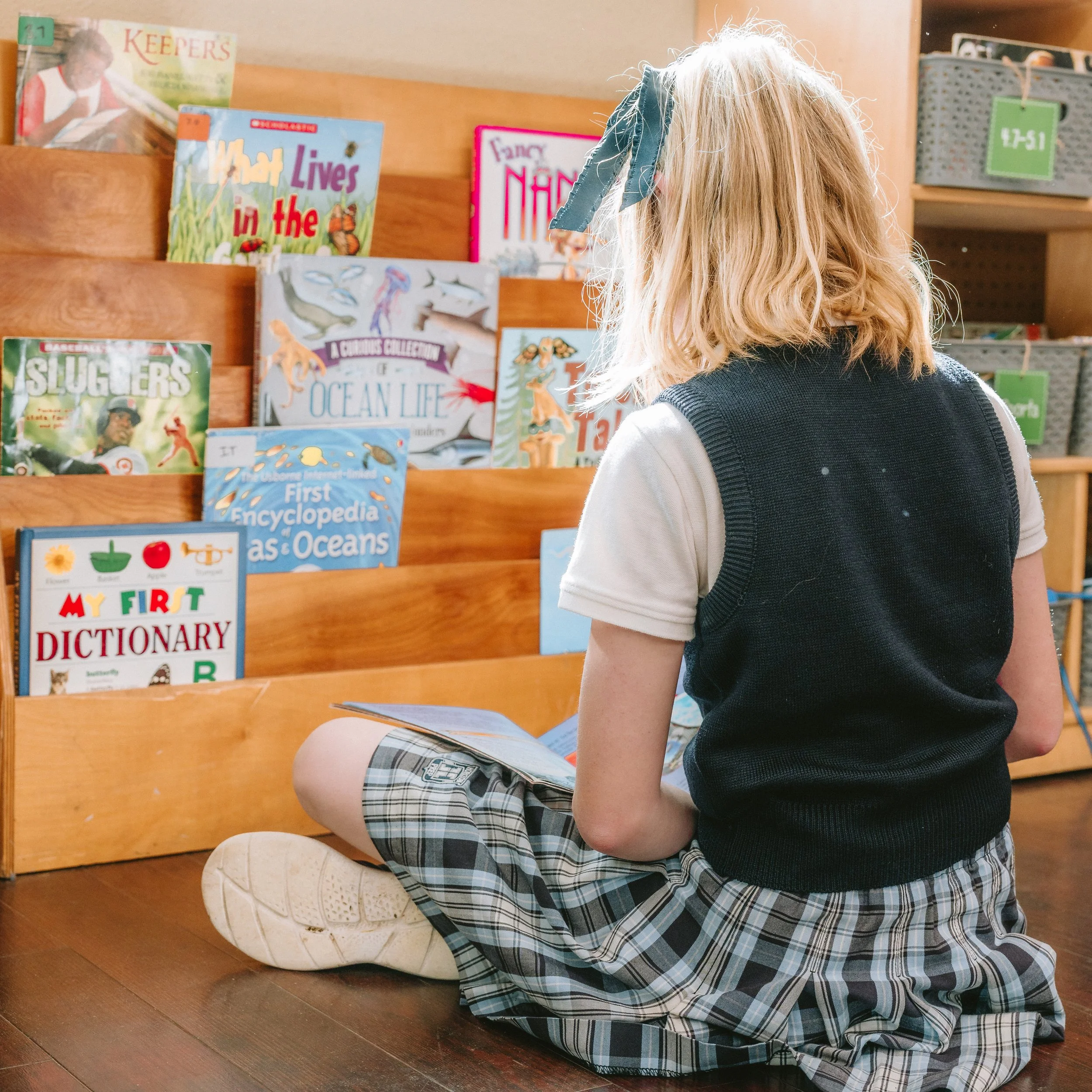
Students develop reading, vocabulary, grammar, phonics, fluency, comprehension, and writing skills through a vertically aligned literacy program. As they grow, students move from learning to read toward reading rich literature with understanding, imagination, and discernment.
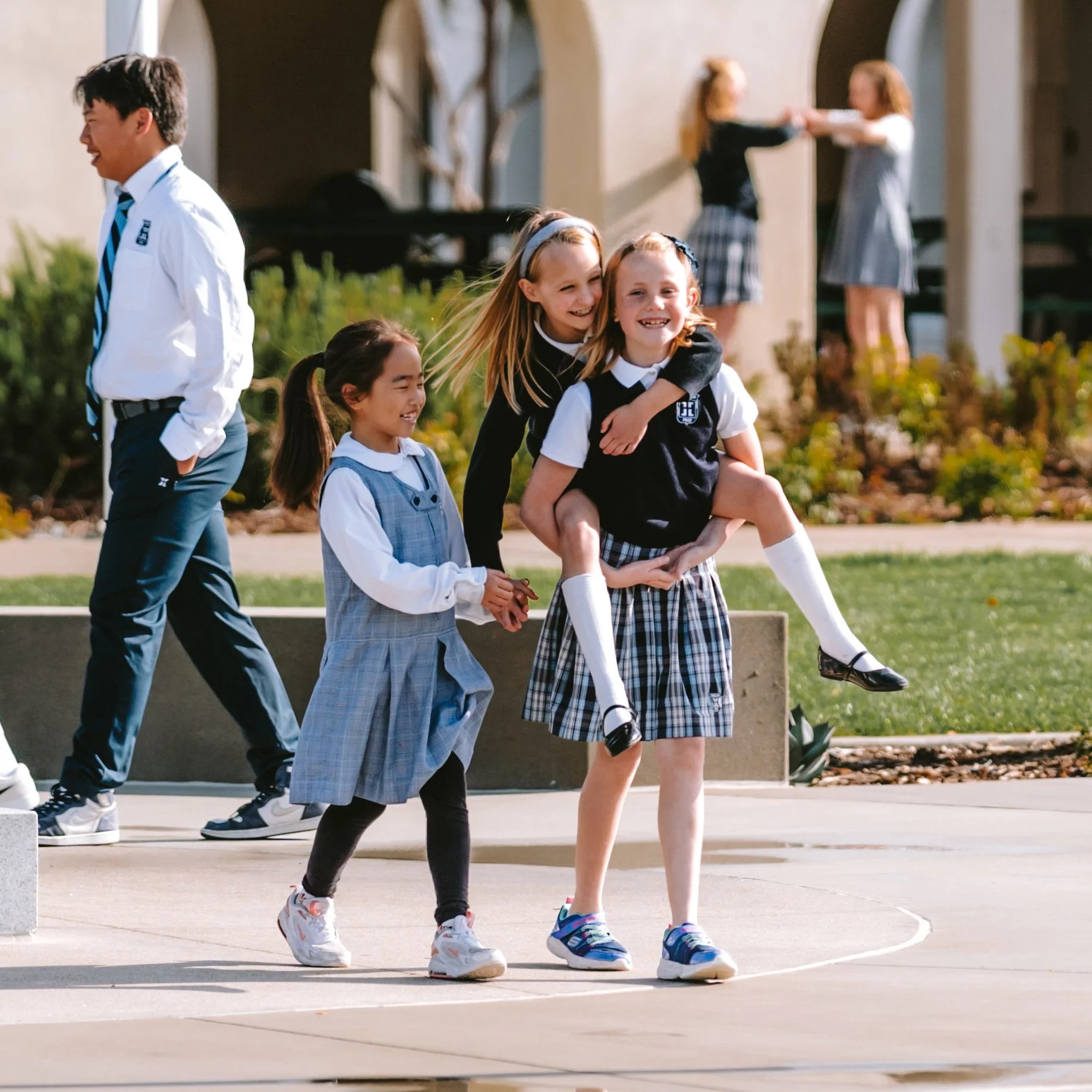
Memory, Song & Recitation
Students learn through Bible verses, poems, grammar jingles, math facts, history songs, Latin vocabulary, chants, and carefully selected memorization. This classical approach strengthens retention, confidence, language development, and joy in learning.
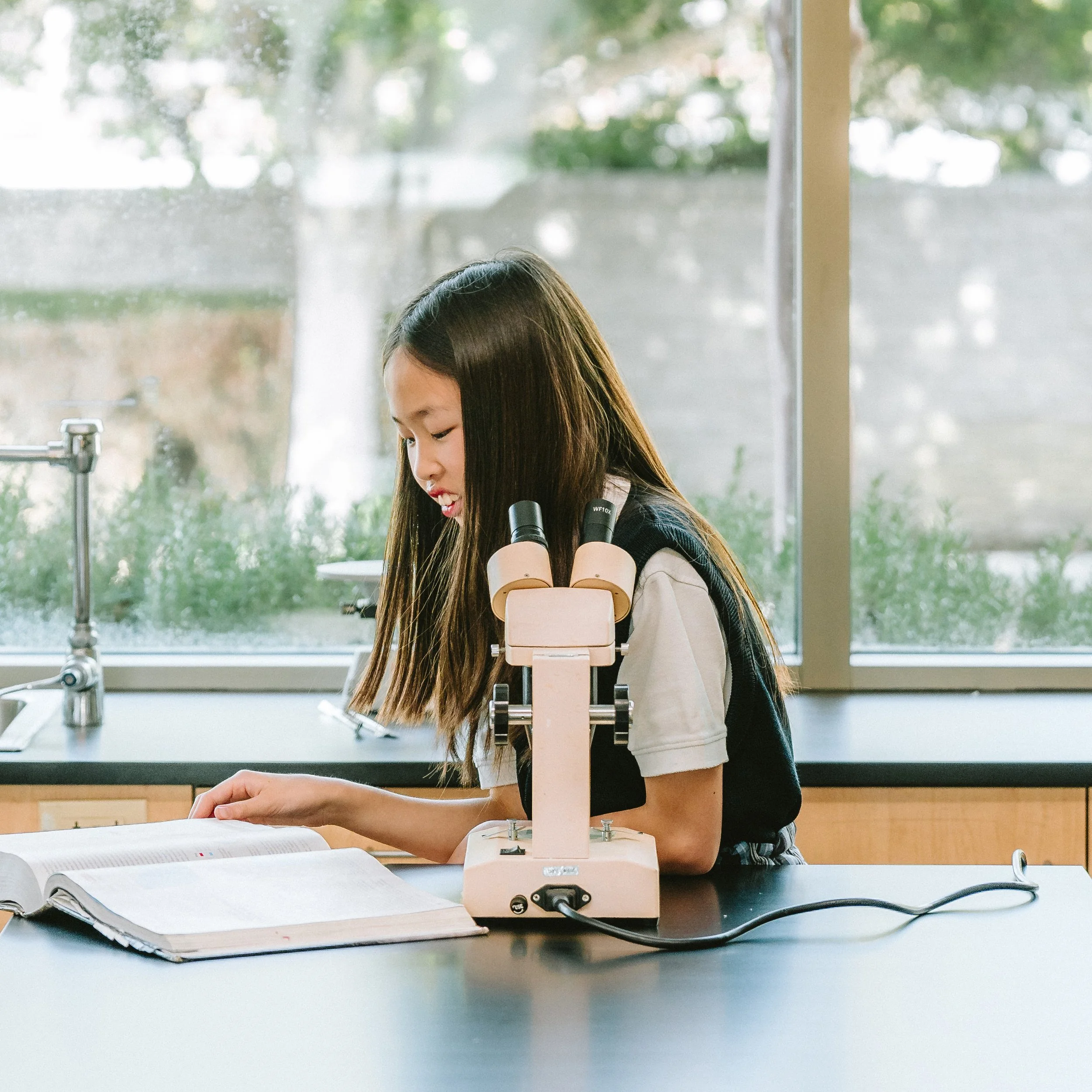
Hands-On Learning
Classical does not mean passive. Lessons are active and memorable through experiments, projects, manipulatives, maps, timelines, classroom discussion, movement, and multisensory activities that help students embody what they are learning.
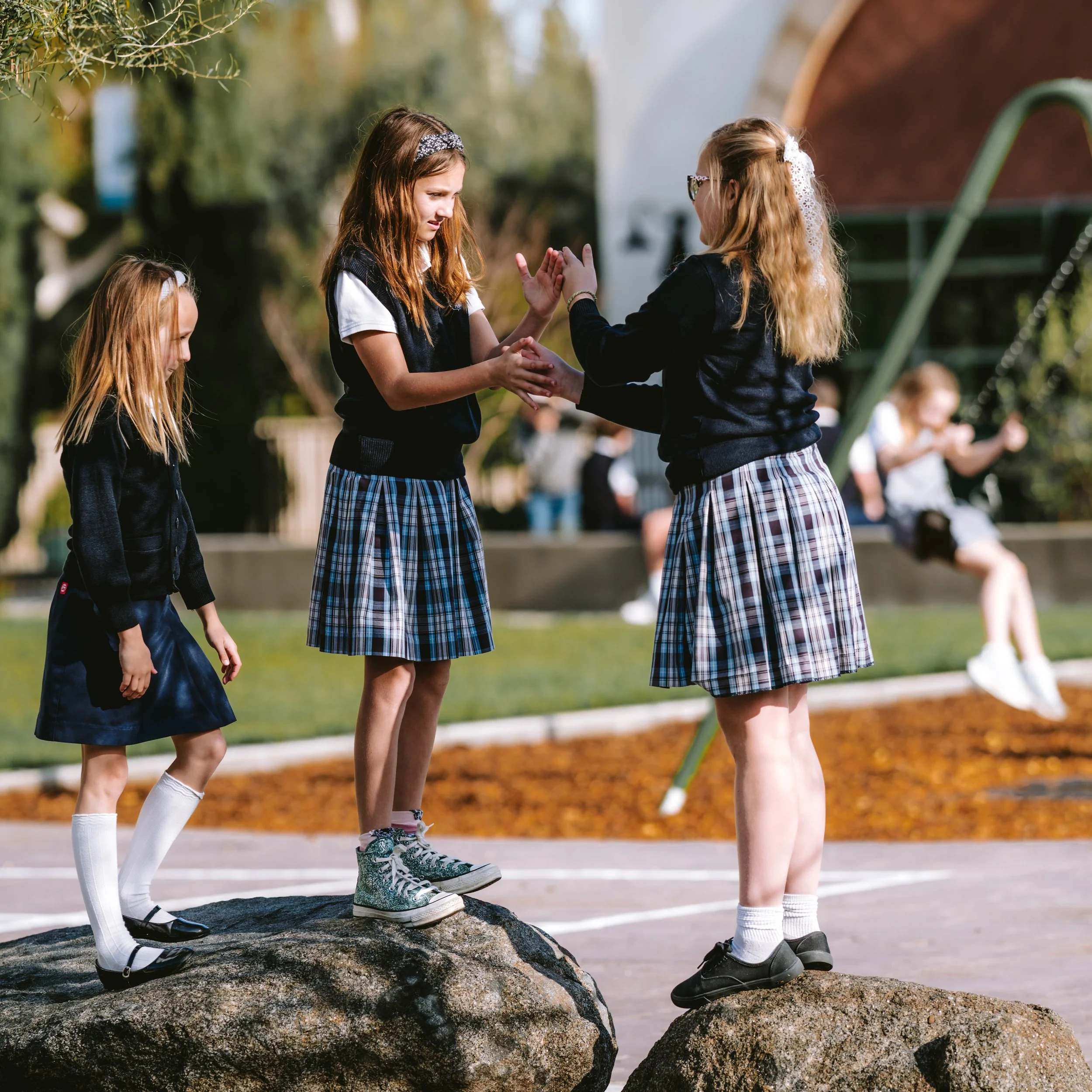
Biblical Integration
Bible is not treated as a separate subject only. Biblical truth and Christian worldview are thoughtfully integrated throughout classroom life and core instruction, helping students understand that God’s truth shapes every area of knowledge.
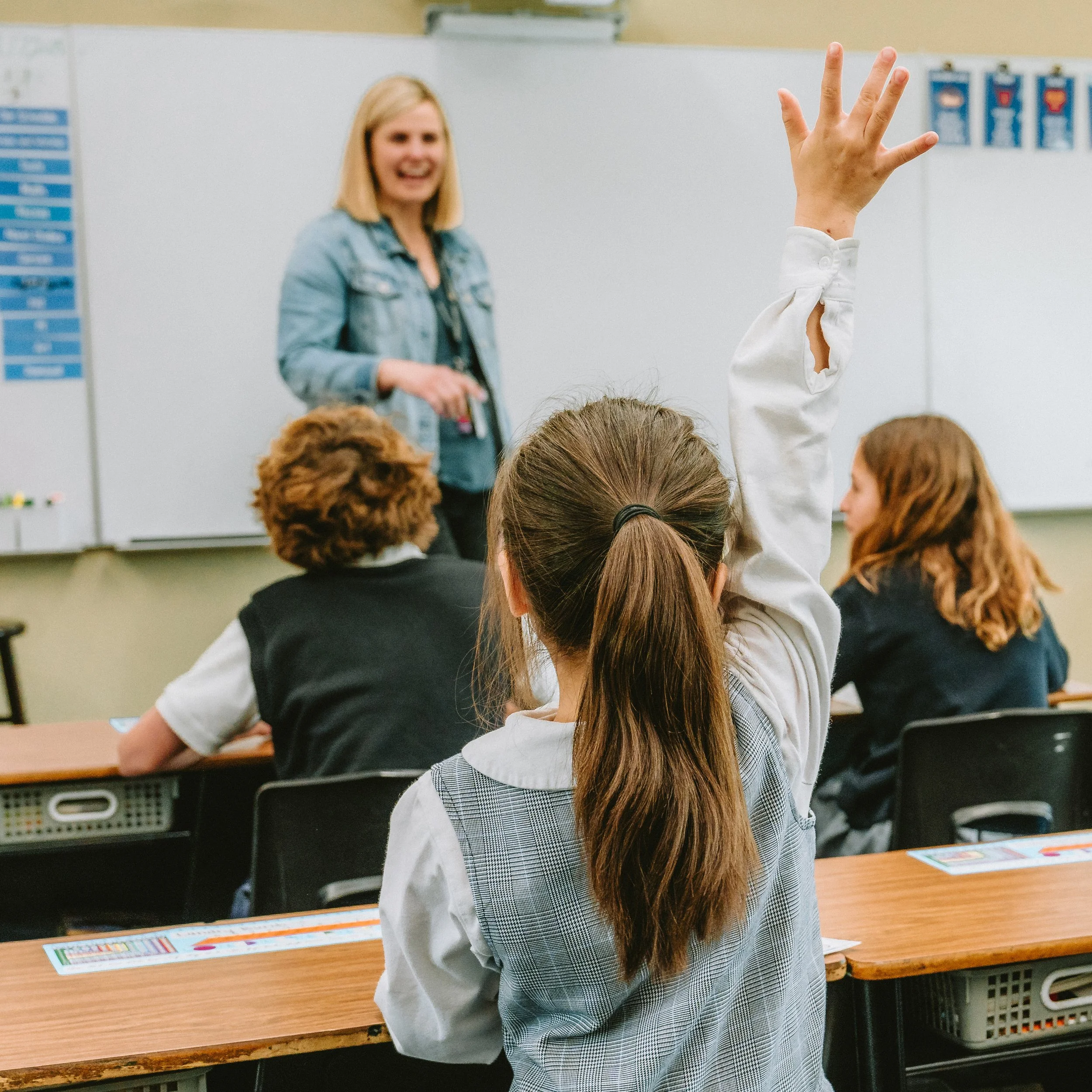
Early Language Study
Students are introduced to Spanish beginning in Preschool and Latin beginning in 1st grade. Latin strengthens vocabulary, grammar, language patterns, memory, and future language learning, while Spanish gives students early exposure to communication and culture.
Curriculum Overview
Grammar School instruction is intentionally designed to build vertically from Kindergarten through 5th grade. Each year adds knowledge, skill, memory, and maturity while preparing students for the increased independence and critical thinking of Logic School.
In the Grammar years, students are not simply collecting information. They are building the intellectual furniture of the mind — the words, stories, facts, habits, and categories they will later use to reason wisely, write clearly, speak confidently, and understand the world through a biblical lens.
-
Horizon Prep’s literacy curriculum addresses the full range of reading and writing development, including phonemic awareness, explicit phonics, fluency, vocabulary, comprehension, grammar, and written expression. In the classical tradition, students are formed by language: they hear excellent stories, practice careful reading, memorize meaningful passages, learn grammar, and grow in their ability to express ideas clearly.
-
Students learn to express ideas clearly through sentence structure, grammar fundamentals, writing traits, spelling, vocabulary, and increasingly sophisticated writing assignments. As students progress, they are introduced to classical writing exercises and multiple forms of writing, including narration, summaries, research, persuasive writing, poetry, and responses to literature.
-
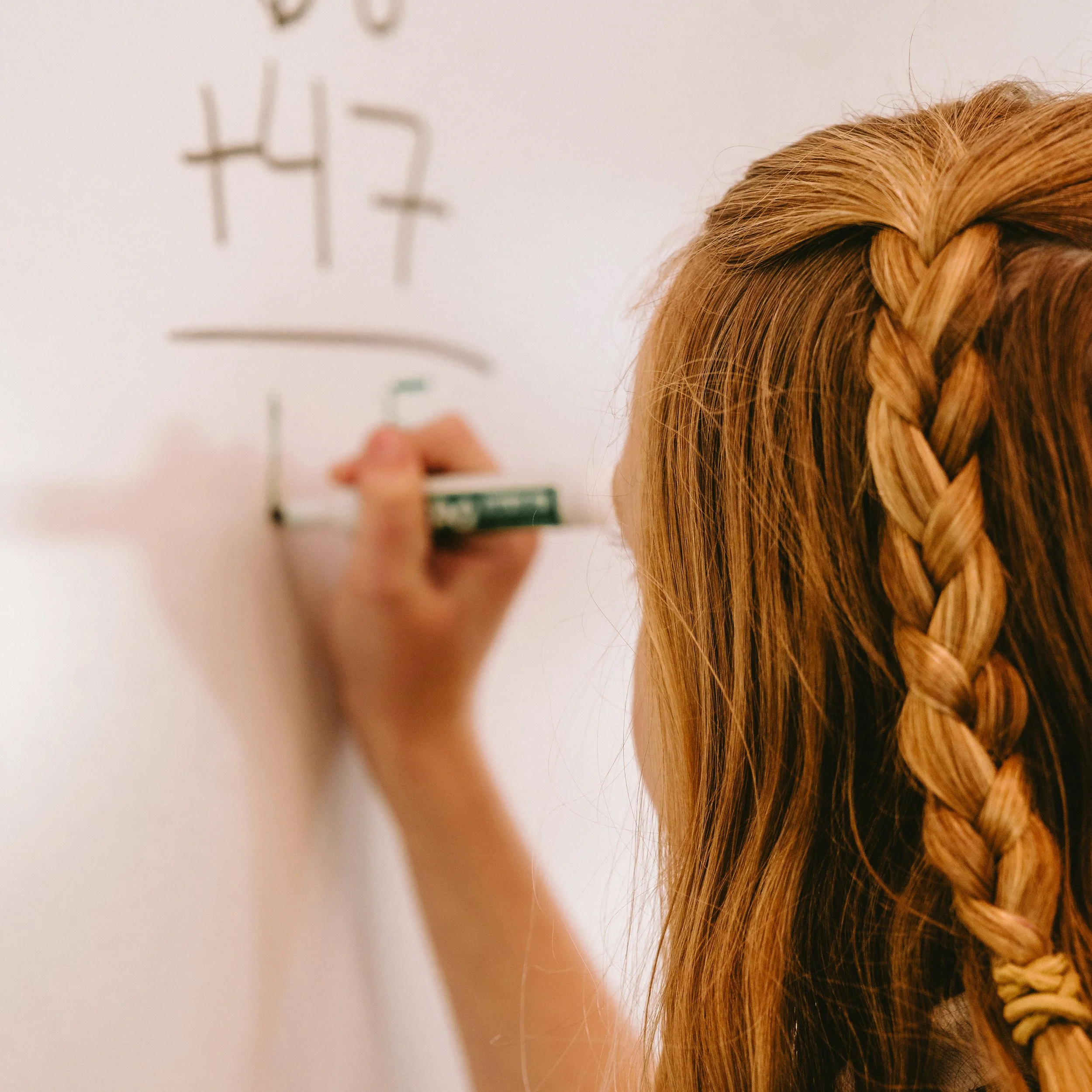
Students build number sense, fluency, problem-solving ability, mathematical vocabulary, and higher-level critical thinking. Instruction includes whole-class lessons, small group work, hands-on manipulatives, math journals, math meetings, and customized learning opportunities to support and challenge students. Students practice facts and processes while learning that mathematics reveals order, pattern, and precision in God’s creation.
-
Students learn Bible stories, memorize Scripture, participate in chapel and worship, and develop practical character-building tools rooted in biblical truth. Through repeated exposure to Scripture, biblical history, geography, worship, and classroom application, students begin forming a worldview shaped by God’s Word.
-
Students engage in hands-on science learning through experiments and real-world activities in life science, earth science, physical science, chemistry, and ecology. Students observe, classify, question, test, and wonder — learning to see the created world as orderly, intelligible, and full of God’s handiwork.
-
Students study key people, events, dates, places, and civilizations through a classical approach that includes timeline work, songs, maps, atlases, projects, memorization, and hands-on activities. Rather than treating history as disconnected facts, students begin seeing the story of the world unfold across time and place under God’s providence.
-
Language study strengthens grammar, vocabulary, critical thinking, and communication. Spanish begins in Preschool, while Latin begins in 1st grade as students build vocabulary, language patterns, songs, phrases, prayers, and foundational understanding that supports English grammar, reading comprehension, and future language learning.
-
Students develop print and cursive handwriting skills, with older Grammar School students producing cursive passages connected to history and learning. As students progress, they are introduced to planners, note-taking, organization, research methods, and study habits that prepare them for Logic School. These habits form order, attention, and personal responsibility.
Curriculum Tracking
Grammar School learning is intentionally sequenced. Each year builds on the one before it, helping students grow in knowledge, skill, confidence, independence, and readiness for Logic School.
This progression allows families to see not only what students learn in each grade, but how the curriculum develops over time.
Grade
Literacy & Writing
Bible, History & Geography
Math
Classical & Enrichment
Kindergarten
Early literacy, phonemic awareness, letter recognition, guided reading, beginning writing, oral expression, and simple sentences
Number sense, classification, patterns, measurement, operations, problem solving, and math meeting activities
Bible stories, Scripture memory, chapel, worship, character formation, and introduction to God’s Word
Songs, chants, movement, Spanish, art, music, PE, library, and joyful classroom routines
1st Grade
Guided reading, vocabulary, phonics, writing, spelling, grammar, handwriting, Lexia, and Accelerated Reader
Addition and subtraction, place value, measurement, time, data, geometry, and math vocabulary
Genesis through Joshua, Old Testament and Ancient Egypt, geography songs, and early timeline learning
Latin begins with songs, vocabulary, phrases, and conversational Latin; Spanish, art, music, technology, PE, and library
2nd Grade
Core literature, reading comprehension, grammar, writing, spelling, phonics, vocabulary, handwriting, Lexia, and Accelerated Reader
Addition and subtraction fluency, money, time, graphing, measurement, fractions, geometry, and early multiplication and division
Judges through Kings, New Testament, Greece and Rome, Africa geography, and history songs
Song School Latin Book 2, Spanish vocabulary and conversation, Greek Olympics, Latin Bee, and special area classes
3rd Grade
Novel studies, cursive, Shurley English, vocabulary, book reports, research reports, comprehension, and writing benchmarks
Multiplication and division, four operations, fractions, measurement, area, perimeter, geometry, and math sound-offs
Chronicles through Malachi and Job, Middle Ages, Renaissance, Reformation, and geography
Latin for Children Primer A, Spanish communication, memorization, Charlotte’s Web Day, Invention Convention, and special area classes
4th Grade
Deeper novel studies, literary comprehension, grammar and writing, cursive, research reports, study skills, and note-taking
Multi-digit arithmetic, factors and multiples, fractions, decimals, measurement conversion, angles, and problem solving
The Gospels, Explorers through 1815, California History, states and capitals, and historical projects
Latin for Children Primer B, Spanish, Greek and Latin roots, Revolutionary War Living Museum, student-led conferences, and special area classes
5th Grade
Advanced novel studies, 6+1 Traits writing, classical writing exercises, research, grammar, vocabulary, typing transition, and literary discussion
Numerical expressions, decimals, fractions, measurement conversion, volume, coordinate plane, geometry, and math readiness
Acts through Revelation, 1815 to present day, modern history, geography, and American documents
Latin for Children Primer B, Spanish, Gettysburg Address, Psalm 139, Biz Town, Narnia Day, athletics, arts, and Logic School readiness
Beyond the Core Classroom
A Full Grammar School Experience
Grammar School students grow through more than core academics. Special area classes, competitions, events, field trips, chapel, worship, and student activities help create a vibrant and memorable elementary experience.
These experiences reinforce the classical goal of forming the whole student — mind, heart, body, imagination, memory, and character.
Highlights
Weekly chapel and regular praise and worship
Spanish, Latin, art, music, technology, physical education, and library
Spelling Bee, Speech Meet, Math Olympics, and Latin Bee opportunities
Field trips connected to classroom learning
Special events such as Greek Olympics, Charlotte’s Web Day, Revolutionary War Living Museum, Narnia Day, Junior Achievement Biz Town, and student-led conferences
Clubs, enrichment activities, and age-appropriate athletic opportunities
Preparing Students for Logic School
Prepared for the Next Stage
The Grammar School years are designed to do more than prepare students for the next grade. They prepare students for the next stage of learning.
In classical education, the Grammar stage gives students the knowledge, vocabulary, memory, and habits they will later use in the Logic stage, where they begin asking deeper questions, making connections, forming arguments, and testing ideas.
By the end of 5th grade, Horizon Prep students have developed strong academic foundations, exposure to rich literature and history, confidence in memorization and public speaking, early study skills, biblical grounding, and the habits needed for the increased independence and critical thinking of Logic School.
Come See Grammar School in Action
The best way to understand Horizon Prep’s Grammar School is to experience it firsthand. We invite your family to visit campus, meet our team, and see how students are known personally, challenged academically, and formed with wisdom, character, and purpose.
